2017–2020
Digital Graphic Design
Web design, communication, content and visual execution. This is where I built the foundation that still shapes many of my decisions today.
Questions have always been my starting point. I rarely settle for the first answer; I need to understand what’s behind it, look at things from different angles and question what seems obvious. Being self-taught shaped the way I work: I learn as I go, experiment freely and adapt quickly to new contexts.
I started in visual design, but those same questions pushed me beyond aesthetics. It stopped being only about how something looked or what it communicated, and became about who it was for, the decisions behind it and whether it was actually solving a problem.
Product design became the place where I could answer those questions — and actually do something with the answers.

My career grew alongside my curiosity: I started in visual design, specialized in UX/UI, and gradually found myself getting closer to product decisions.
Web design, communication, content and visual execution. This is where I built the foundation that still shapes many of my decisions today.
My work started shifting from “how it looks” to “how it works”: flows, architecture, systems and experience decisions.
My role expanded into requirements, functional analysis, documentation, validation and supporting the product through implementation.
Design, analysis, strategy and AI all come together in the way I work. I move between them depending on what each product needs.
Asking questions, exploring possibilities and never assuming the first answer is necessarily the best one.
Bringing structure to complexity so people, decisions and products can move forward.
Knowing when to go deeper, when to simplify and when it’s time to make a decision.
The best solutions rarely happen in isolation. I like building them alongside different perspectives.
I combine Design Thinking and Jobs-to-be-Done to understand needs and context, Lean UX to explore and validate quickly, and Scrum to move forward iteratively.
I don’t use them as a fixed recipe. I take what adds value at each stage and adapt the process to the product, the team and the context.
Understand the context, the real needs and what people are trying to accomplish before deciding what to build.
Decide what’s worth solving first and focus the effort where it can have the most impact on the product.
Explore alternatives, turn ideas into flows or prototypes and validate enough to make a well-informed decision.
Build iteratively, stay close through implementation and adjust based on what we learn along the way.
I like complementing what I learn through practice with training that helps me broaden my perspective on product, UX, agility and AI.
Because not everything fits into a resume — and honestly, some of these things are far more important.
I can defend a Disney reference with far more seriousness than necessary.
I make the proposals, but clearly he’s the one behind many of the important decisions.
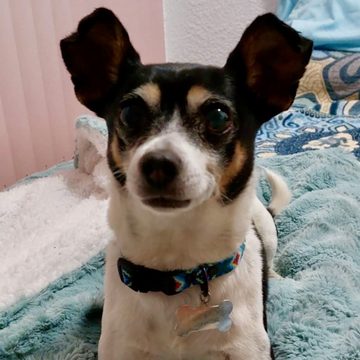
Yes, pretty much all of them. It’s a controversial stance, but at least I’ve been consistent.
I always need something new to look at, listen to or learn from.
I almost never look at them again, but somehow having 847 saved references still counts as a system in my head.